Coronation Gala
The director threw out a previous supplier’s finished package. We built the projection for all seventeen numbers in the one night that was left.
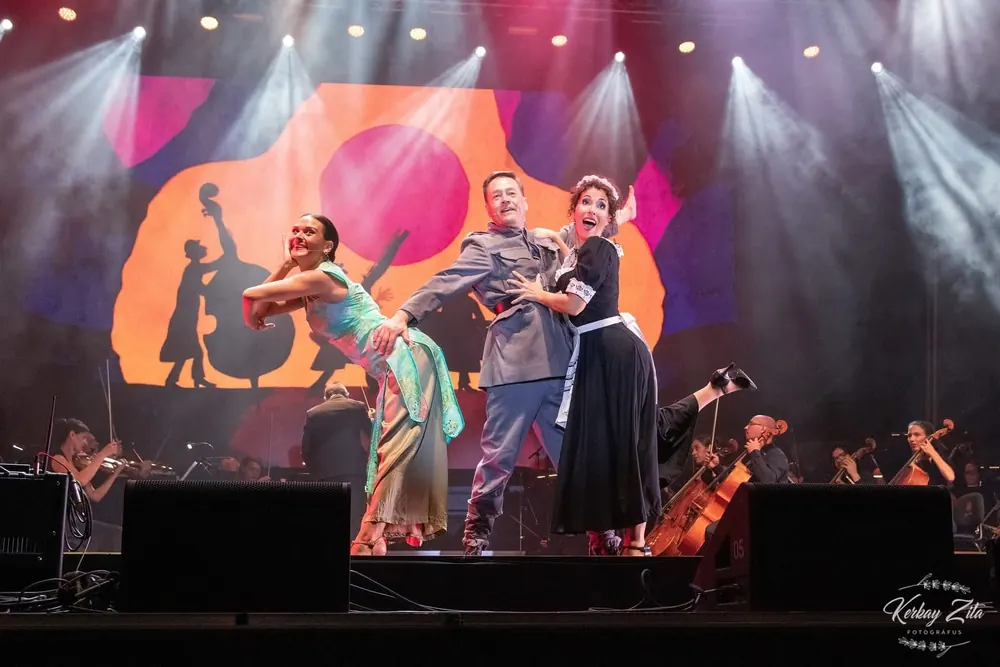
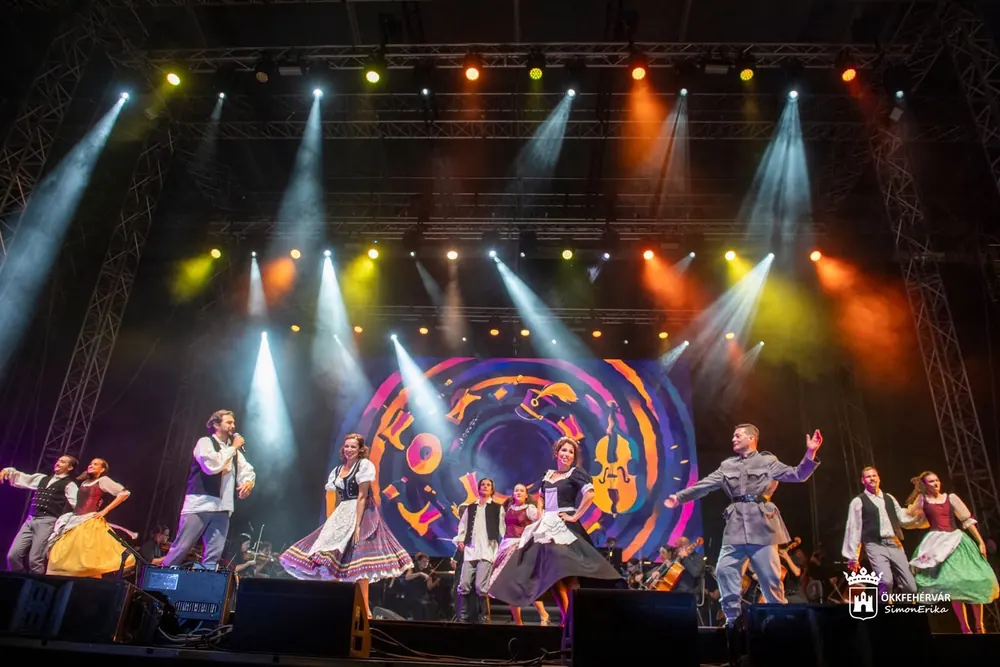
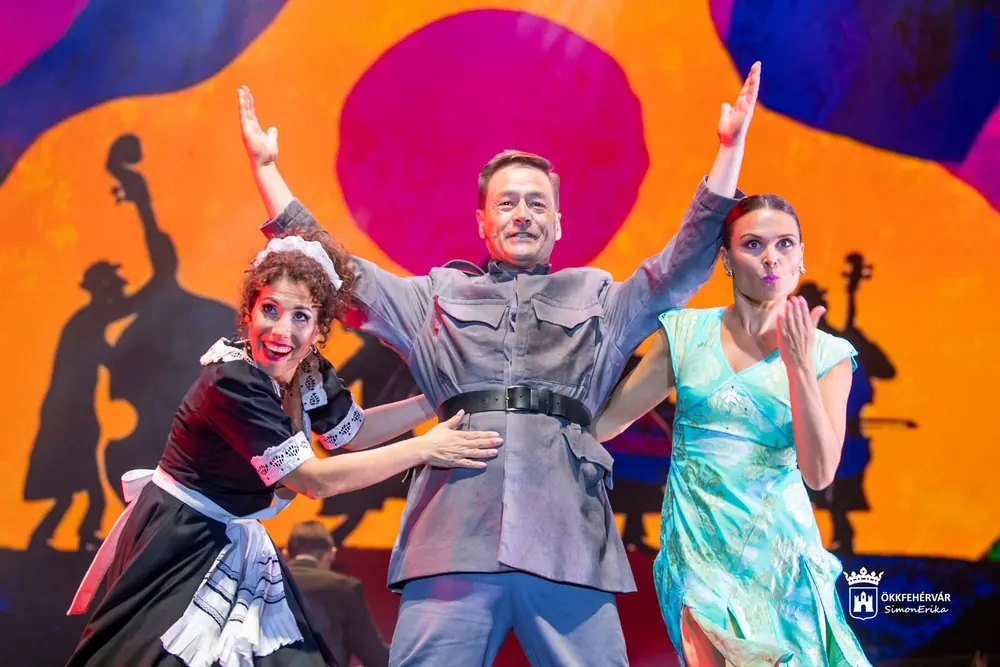
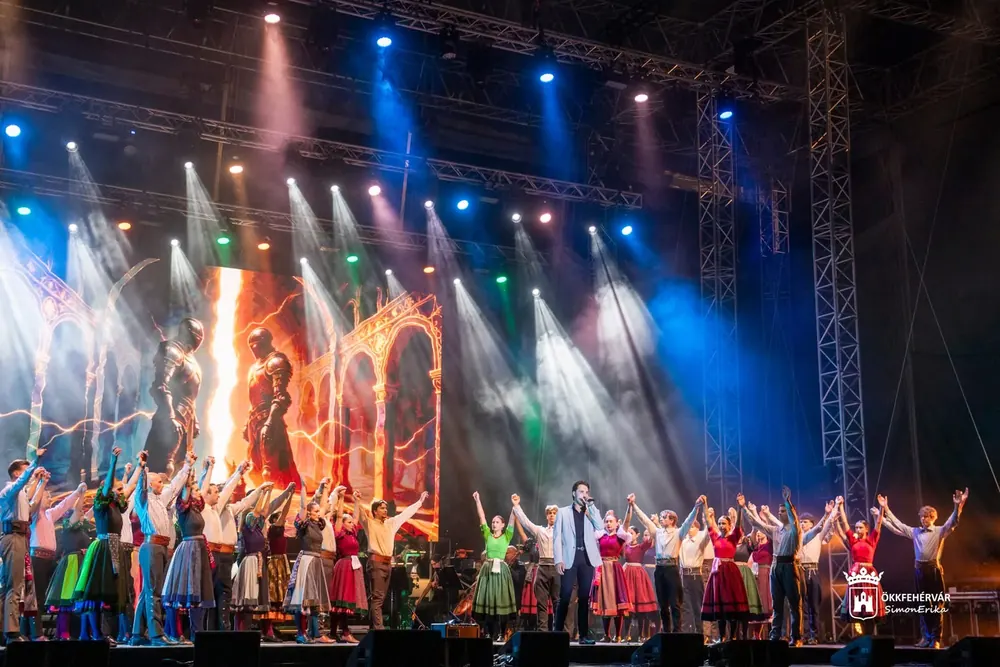
The Royal Days is Székesfehérvár’s largest annual event — a city-wide festival running over several days — and this gala is how it closes. A large open-air stage with the city’s audience in front of it, and on it the city’s symphony orchestra, theatre, ballet company and folk dance ensemble, in one programme, across seventeen numbers.
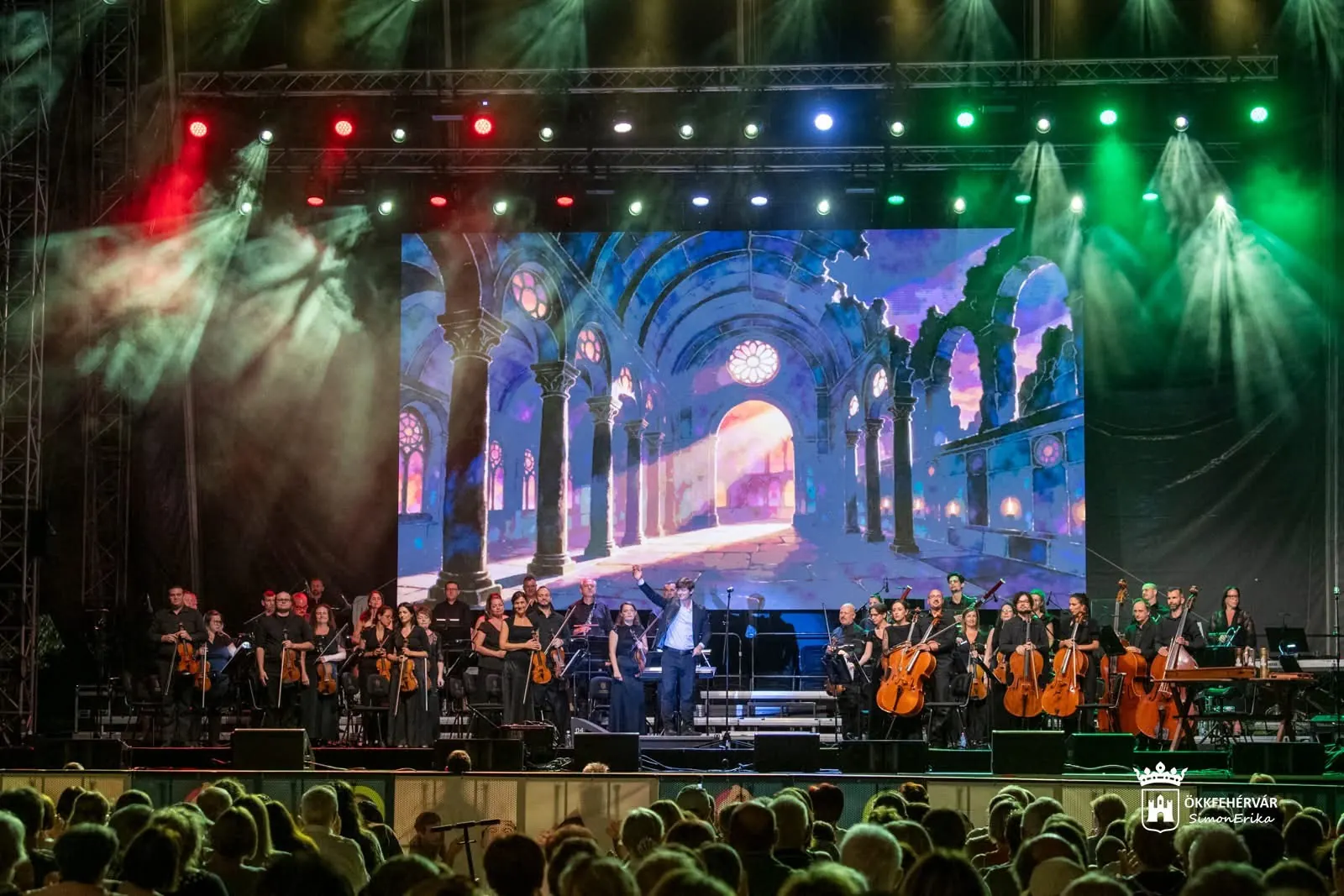
The projected image did not go to a single screen but to several separate LED walls, all carrying the same signal.
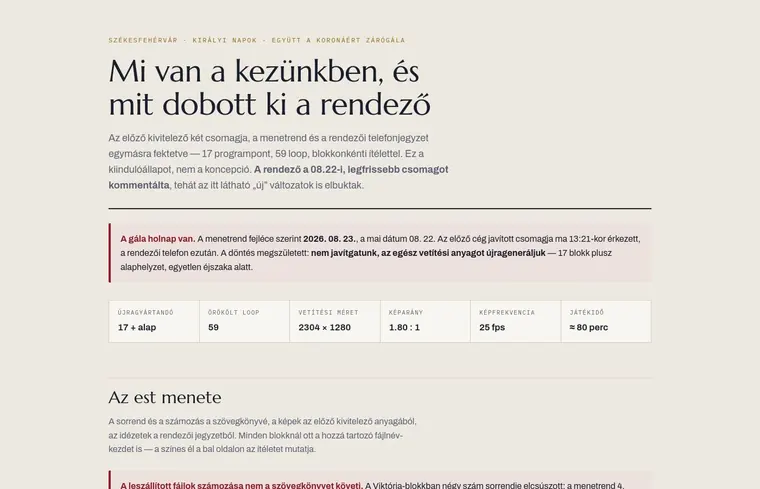
The work did not start from zero. A previous supplier had delivered fifty-nine finished loops in two batches. The director watched all of them and ruled block by block: seven scrapped, nine to be reworked, two acceptable, one approved. So the first recorded decision was not to repair, but to produce the whole thing again.
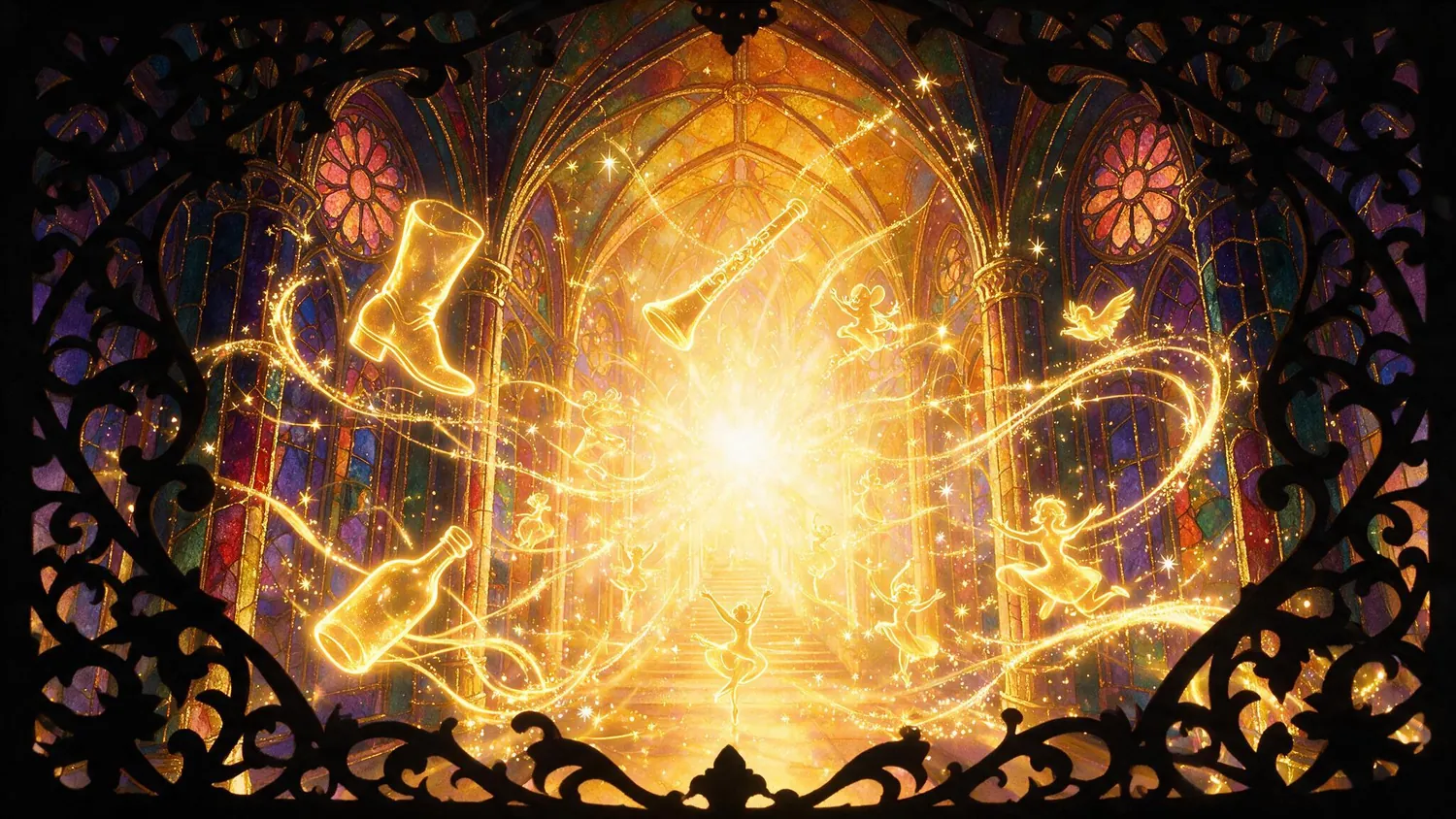
Four expectations came with it. Unity — “the images should not fall apart from one another, there has to be something shared, one mood”. Movement — “everything should dance”. An arc across the evening, ending on a cleared image. And the five operetta numbers in a single place, with objects turning into one another.
All of it nineteen hours and twenty-five minutes before the show. Generating stills is fast, but the video model gives roughly fifteen seconds per clip — under an eight-minute overture that comes around thirty times. That limit did not slow the production down; it wrote the concept.
Of a previous supplier’s fifty-nine loops, one could stay.
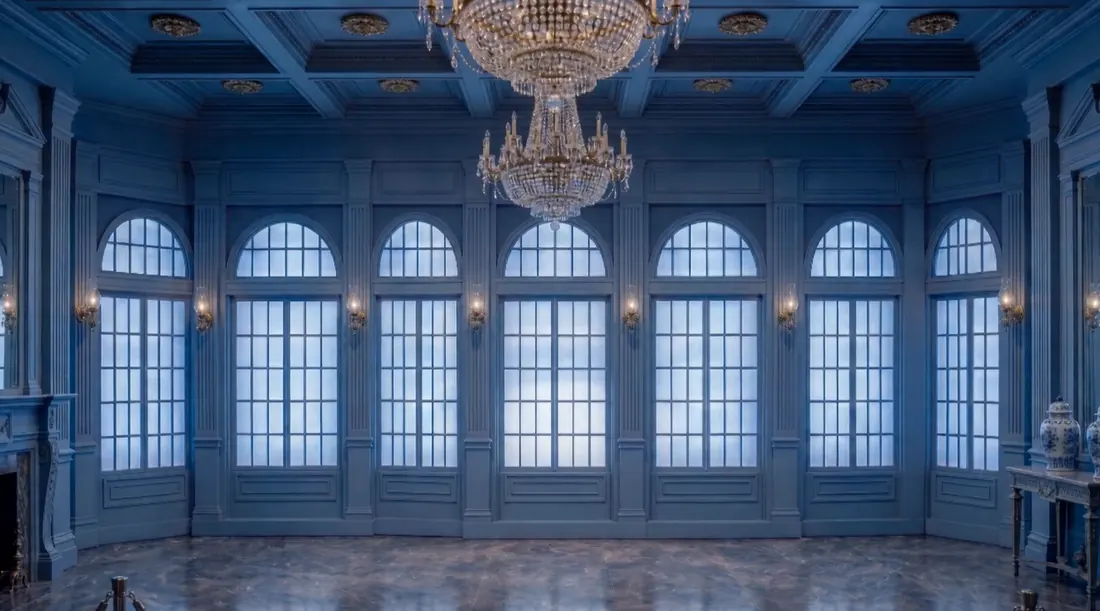
The material we inherited from them was not careless work: cleanly cut, technically sound files. The problem was the visual language. Photorealistic footage alternated with 3D renders, each number in a different world — blue curtain, snowbound watchtower, Japanese sliding door — with titles burned in on top.
We inventoried it block by block: a contact sheet and a key frame for all fifty-nine loops, with the director’s verdict beside each. That is where a quiet error surfaced too: the file numbering in the fourth-to-seventh range had drifted away from the running order.
From there the scrapped material kept working as a reference. Our ban list — no photorealistic footage, no 3D render, no captions — was written straight out of its mistakes. Including our own: our first test generation walked into exactly the same trap.
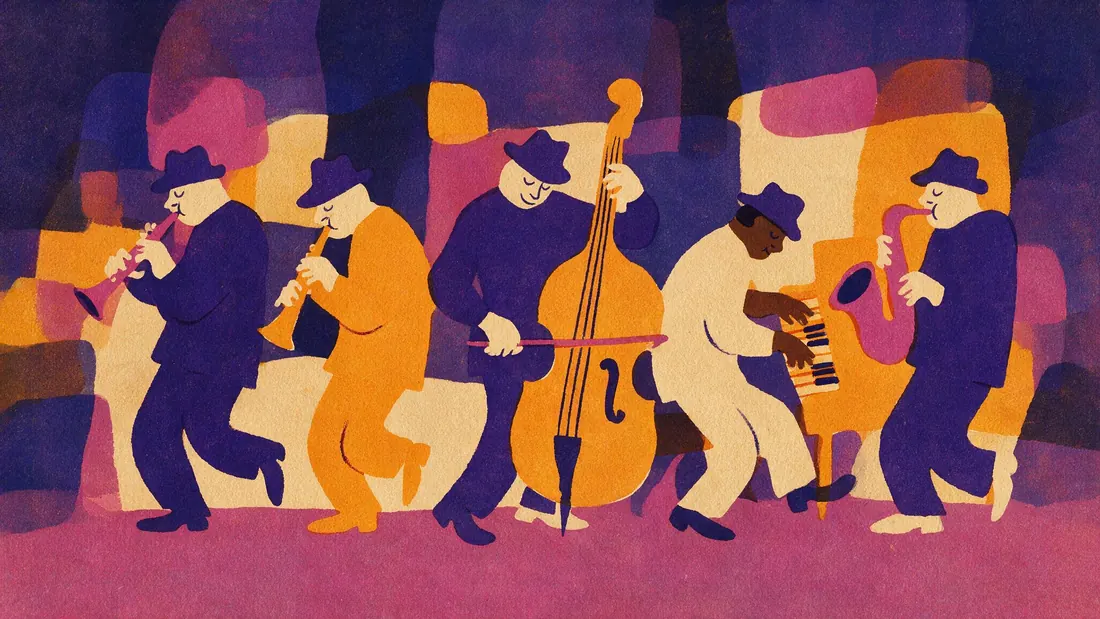
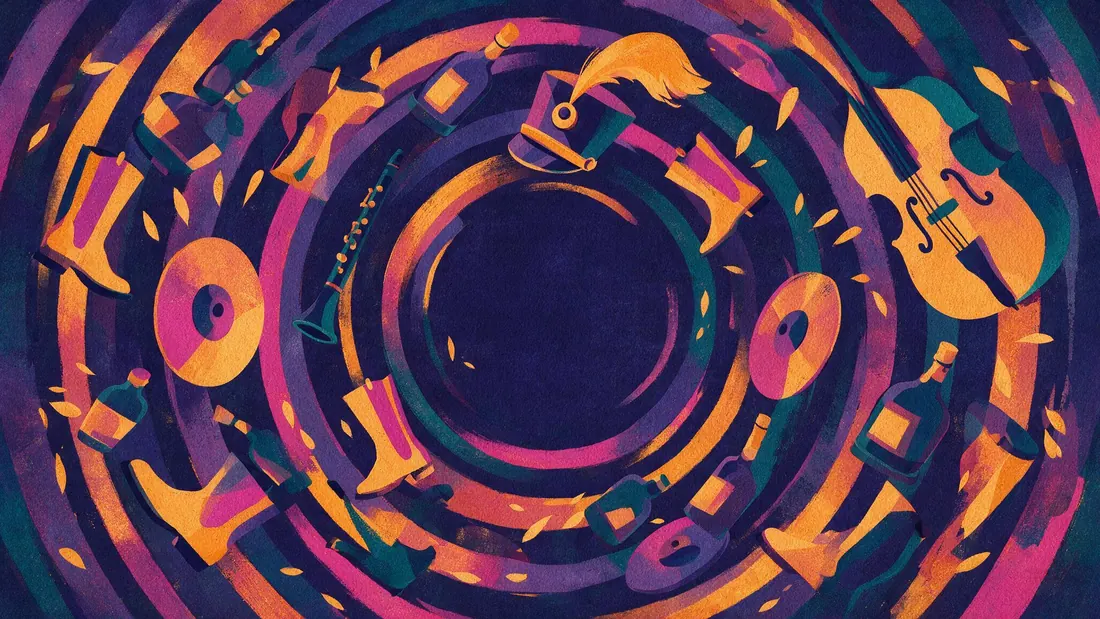

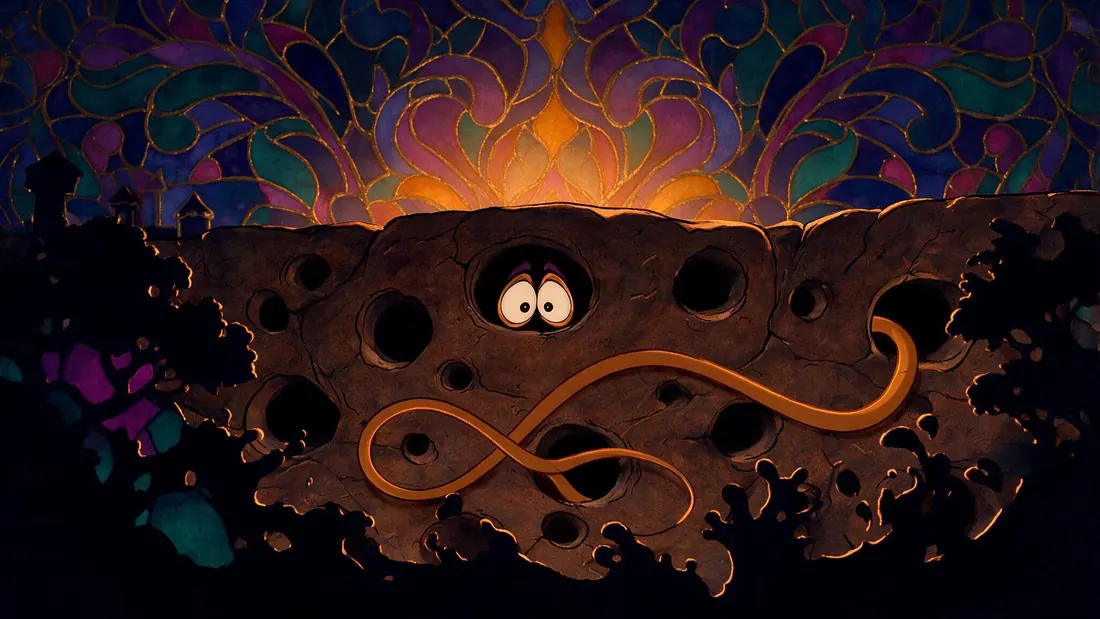
- Files delivered
- 59 loops 22 files
- Visual language
- photo and 3D render drawn, painted
- Text on screen
- burned-in titles no captions
- Setting
- different per number a single space
One image, several walls
The projection did not go to a single screen but to several separate LED walls, all carrying the same signal. That ruled two things out immediately. One is the strongly rhythmic pattern running in one direction: several walls side by side amplify it, and from the audience it reads as noise. The other is anything composed towards the edge — what sits at the frame edge on one wall is already cut off on its neighbour.
What remained was a centred image that reads on its own. No captions either: the client decided there would be no text on the screen, and that meant half as many files as in the previous supplier’s package.
The third constraint matters most. The image runs behind live stage light and live performers. There, fast cuts and flicker are not spectacular but distracting — they pull attention off whoever is on stage. The projection has to give a state, not compete.
One place, five colours, five rules.
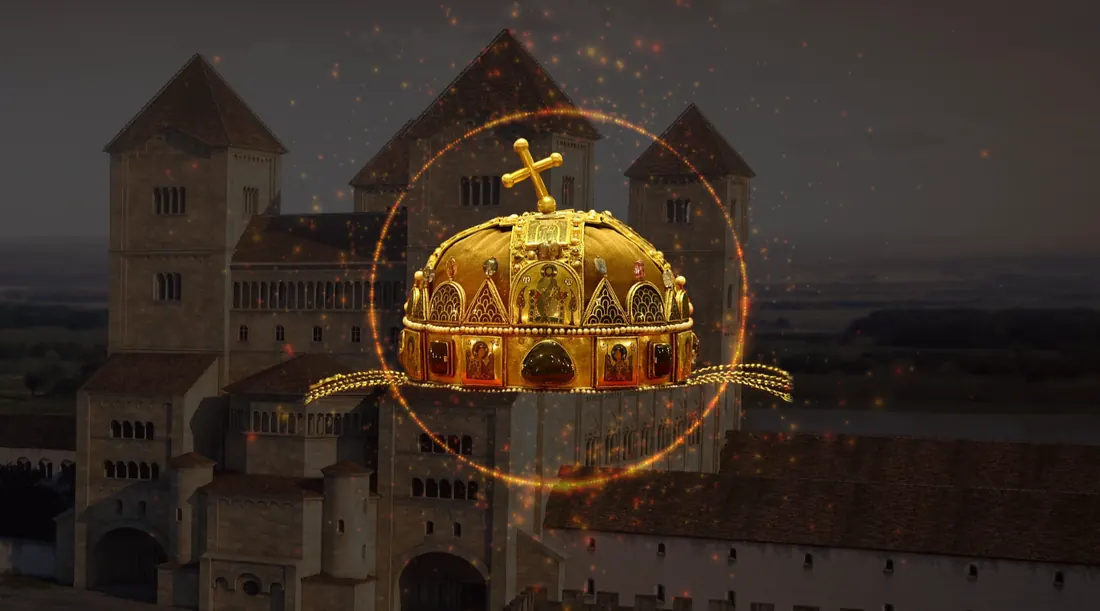
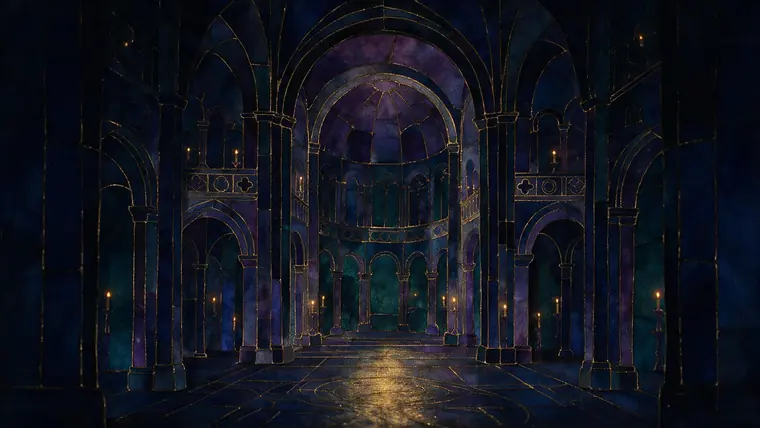
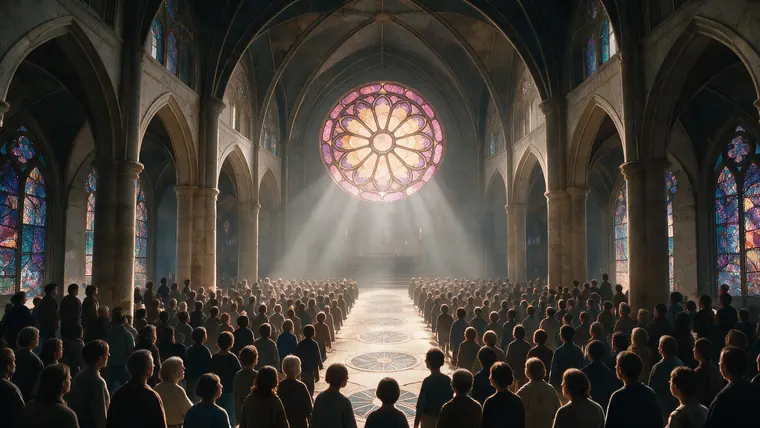
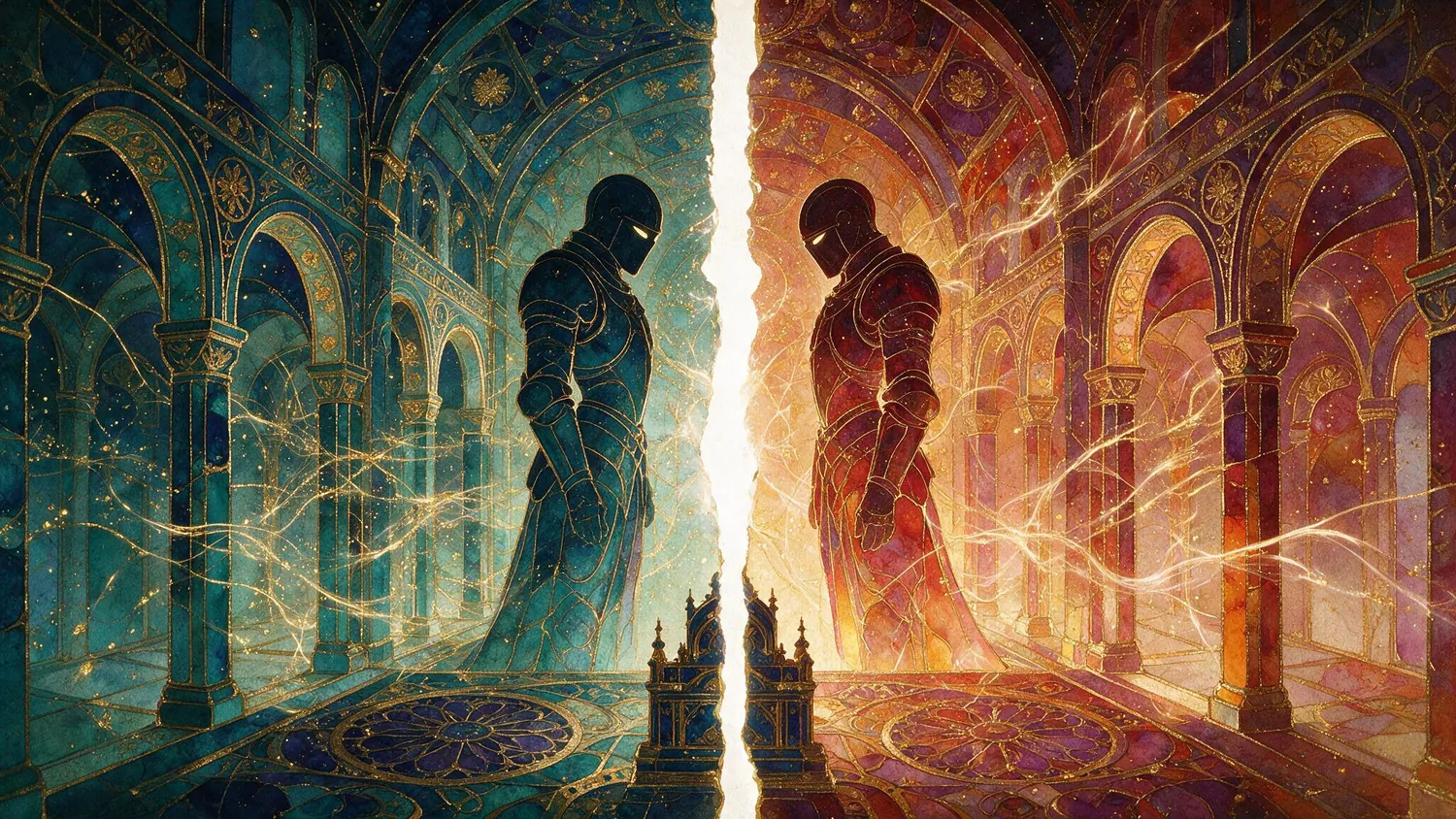
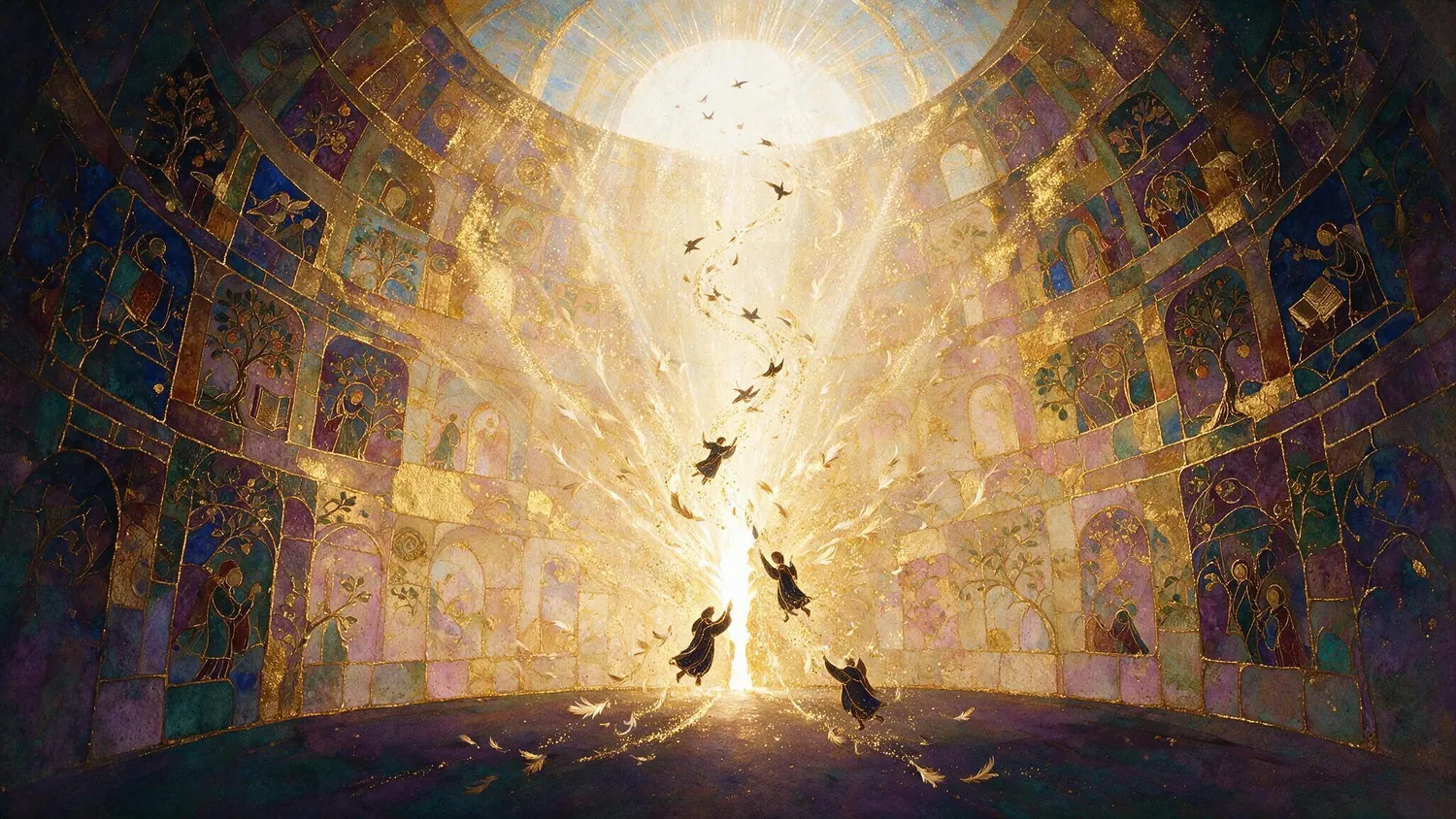
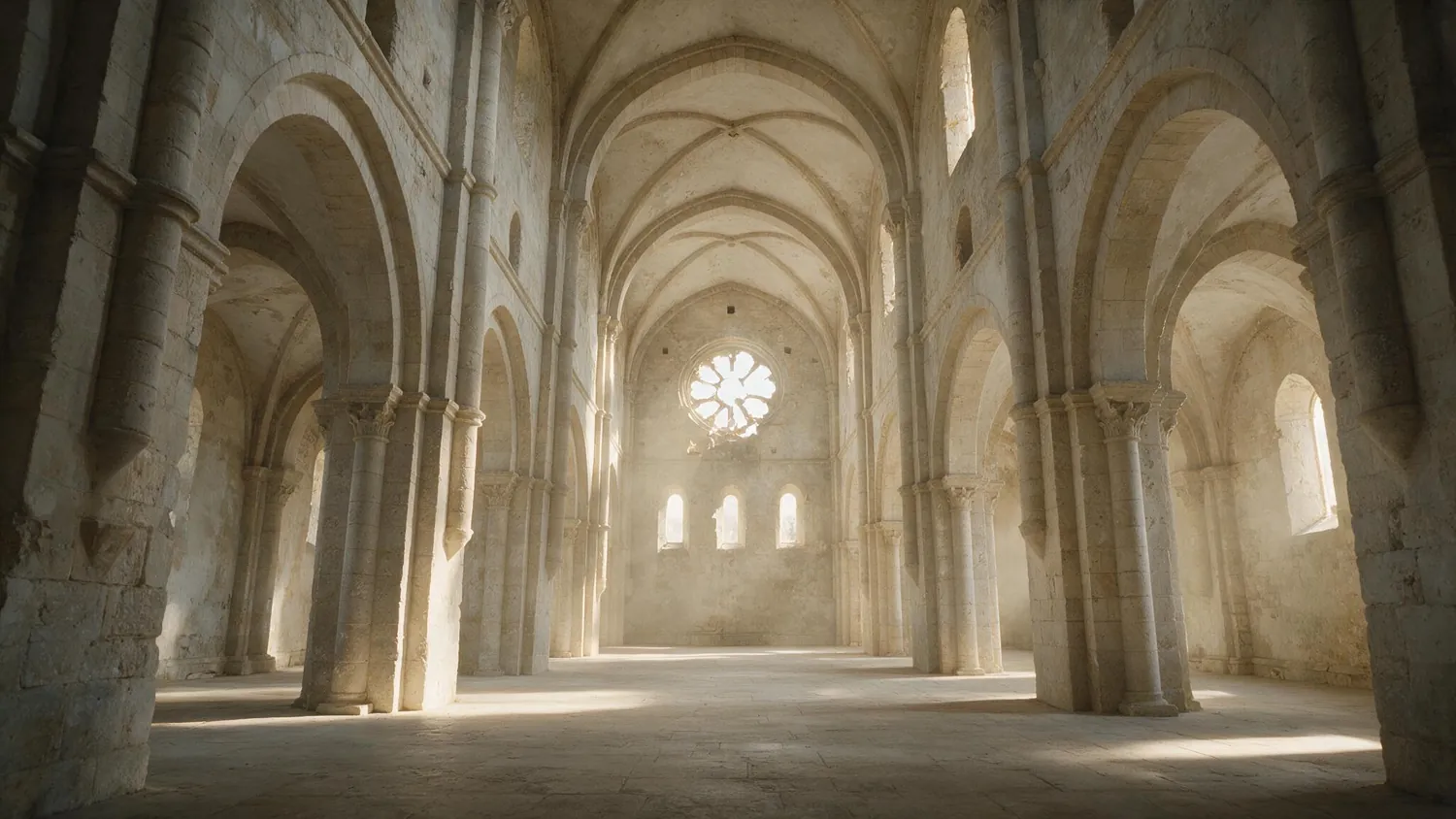
The basilica of the coronation city is a ruin today: the walls stand, the roof is gone. That became the thesis — the evening plays in a single place, among those ruins, and there everything comes alive. Every number happens in the same space; only who walks in and what light fills it changes.
The decision answered the director’s brief directly. If the place stays the same throughout, the seventeen numbers do not scatter into seventeen separate worlds — no “unifying” layer has to be laid over the top, because the unity comes from the structure.
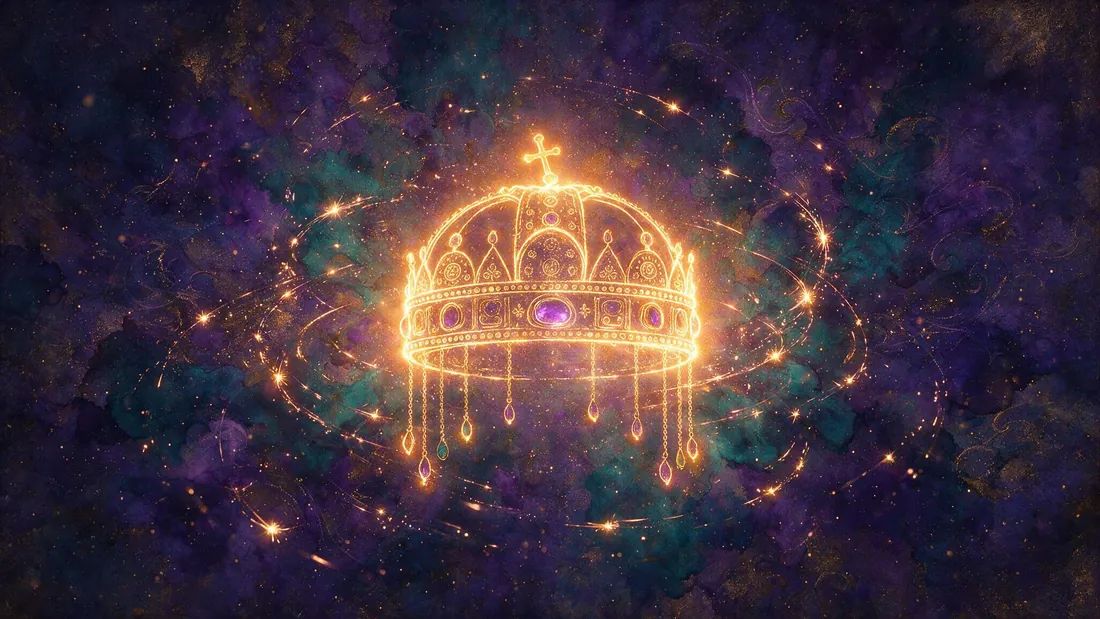
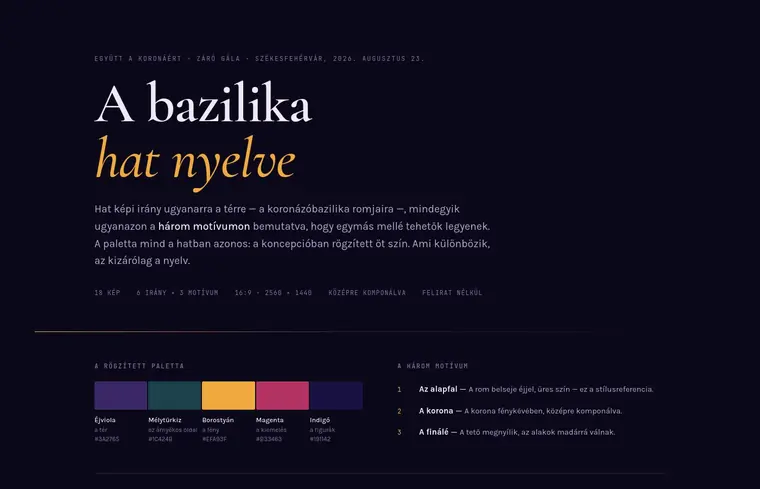
The palette holds five colours and comes from two places: the enamel plaques of the Holy Crown, and the night scenes of nineties animated features. One hard rule goes with it — a figure is never pure black, it always carries a warm rim light, otherwise it reads as cut paper against the background.
There is no typeface on the list, because no text went to the screen. Instead the language became five rules about movement: whatever moves is a character, not a shape; the whole image breathes on a four-to-six-second cycle; between numbers one object turns into the next number’s object; the colour of the space carries the dramaturgy; and there are no cuts — when something has to change, the light source moves.
The images should not fall apart from one another, there has to be something shared, one mood. And everything should dance.
The gala’s director from the directing brief
- Night violet #3A2765 The space
- Deep teal #1C424B The shadow side
- Amber #EFA93F The light
- Magenta #B33463 The accent
- Indigo #191142 The figures
Ten decisions that held up against the deadline.
In nineteen hours there is no time to walk a decision back. Under each one is what it was based on.
-
01
We did not repair the previous supplier’s material — we produced it again.
Nine blocks were ruled “to be reworked”. Repair looks cheaper at first, but it would have meant aligning nine separate visual worlds to each other — while unity was exactly what they lacked. Producing anew was not more work, only work distributed differently.
Based on: the spread of the verdicts. With seven scrapped and nine to be reworked, the remaining two do not hold a programme together.
-
02
One place — a single decision that solves seventeen problems.
Instead of looking for imagery number by number, we put the whole evening inside the ruins of the basilica. From there the question was no longer what a number should depict, but who walks into the space and in what light.
Based on: the director asked for unity. A shared place delivers it structurally, not through colour grading afterwards.
-
03
The loop is not a limit but a form.
The video model gives roughly fifteen seconds. Rather than hide that, we committed to it: classical animation is built from cycles anyway — a walk cycle is a loop. What went under a song was not choreography but a state: one cycle that closes on itself.
Based on: seventeen states and a few links can be produced in nineteen hours. Seventeen fully composed animations cannot.

-
04
The moodboard was a comparison, not a matter of taste.
Six visual languages were worked up, each on the same three motifs and the same palette, so that only the language differed. Beside each one stood what it brings and what it risks.
Based on: if the directions sit on different motifs, the decision is about which picture is liked. On the same motif, it is about which language can carry a programme.
-
05
Ninety versions, one page.
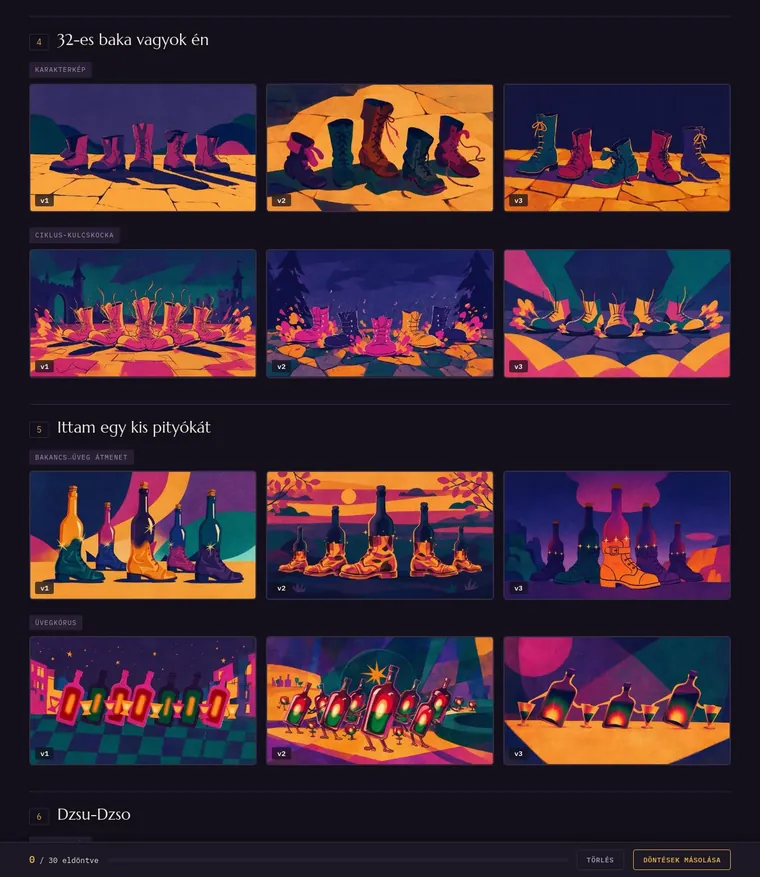
Each of the thirty production positions was generated in three versions. The ninety images went onto a single scrollable page, side by side, selectable with a click — the director closed all thirty in one pass.
Based on: ninety files over email costs days. The same ninety images on one page costs half an hour.
-
06
The prompt described movement only.
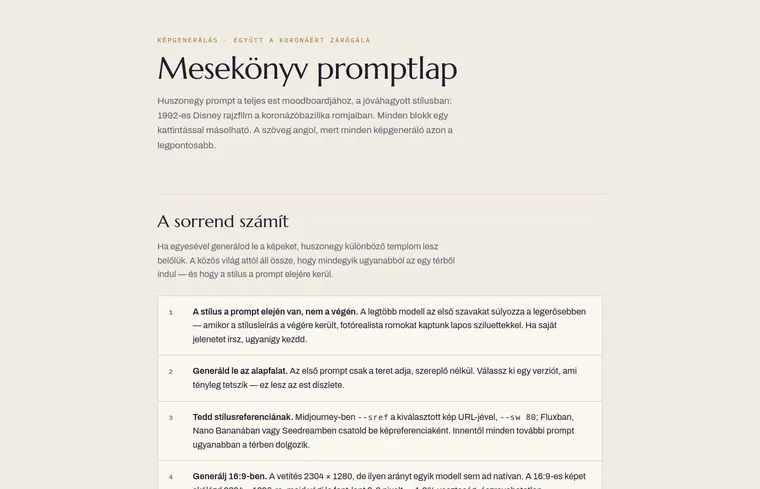
The image was already settled by the version choice. So the animation prompt carried no new element, no camera move and no style description — only what should start moving. When the model still redrew the image, the motion strength came down rather than the prompt getting longer.
Based on: the approved image is the contract. If animation rewrites it, the approval stops meaning anything.
-
07
We closed the loops by measurement, not by eye.
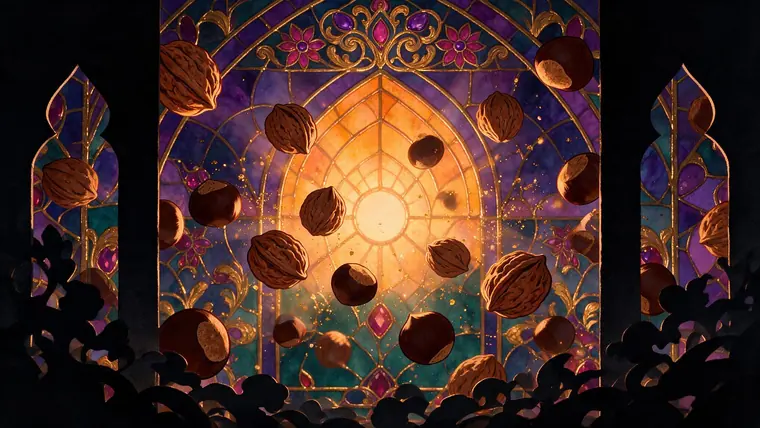
Where backwards motion is believable, the clip was appended playing in reverse — that costs nothing and is perfectly seamless. Where that would have shown, a 0.8 to 1.5 second dissolve closed the circle. The brightness ramp at the start of each generation was found by measuring average luminance frame by frame, not by rewatching.
Based on: a seam comes back thirty times under an eight-minute number. What barely shows once becomes a rhythm at thirty.
-
08
We calculated the loop ratio before anyone listened to the music.
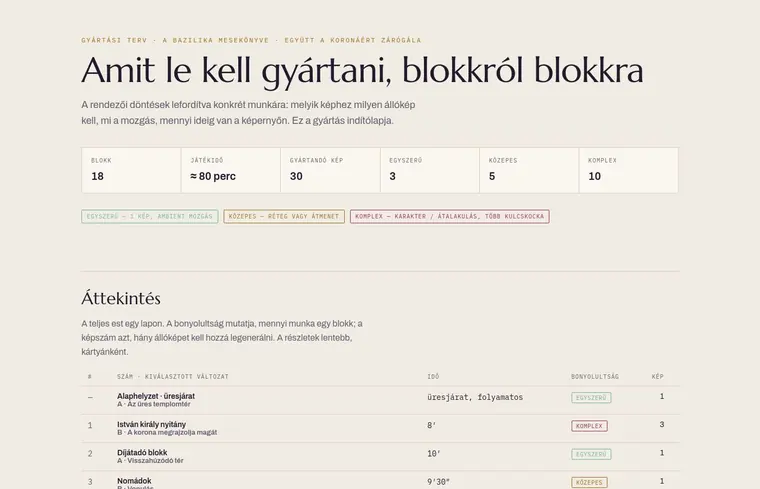
For each block we knew how many times the loop turns over during the number. The measure: above twenty turns it starts to show, above forty it is distracting. The worst ratio was a 4.2-second loop under a nine-and-a-half-minute number — over a hundred and thirty turns.
Based on: extending a loop is arithmetic, not taste. Where the ratio was fine, we left it alone.
-
09
We split the revision into two piles.
After the first production run was finished, the director rewrote the arc of the evening: from the eleventh number the space brightens and the fairy-tale quality wears off. Half the changes were colour correction and retiming — no new generation. The other half needed new images.
Based on: with the two piles mixed together, every change moves at the pace of the expensive one. Split apart, seven blocks were finished immediately.
-
10
The finale mirrors the opening frame.
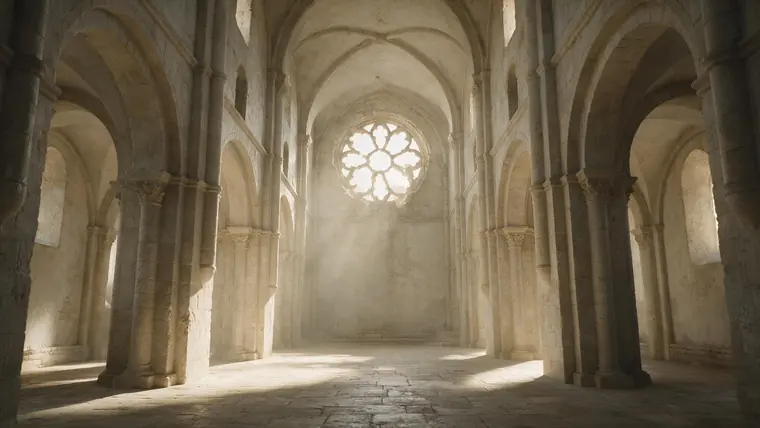
The evening opens on a dark, cold basilica interior. The closing frame holds the same view, only in pale limestone, in clear light, empty. Not a metaphor: it is what happens in the picture.
Based on: the director asked for an arc towards clarity. The same composition in two states says that without a single cut.
Six languages, one decision
The same motif six times, on the same palette — so that only the language differs.
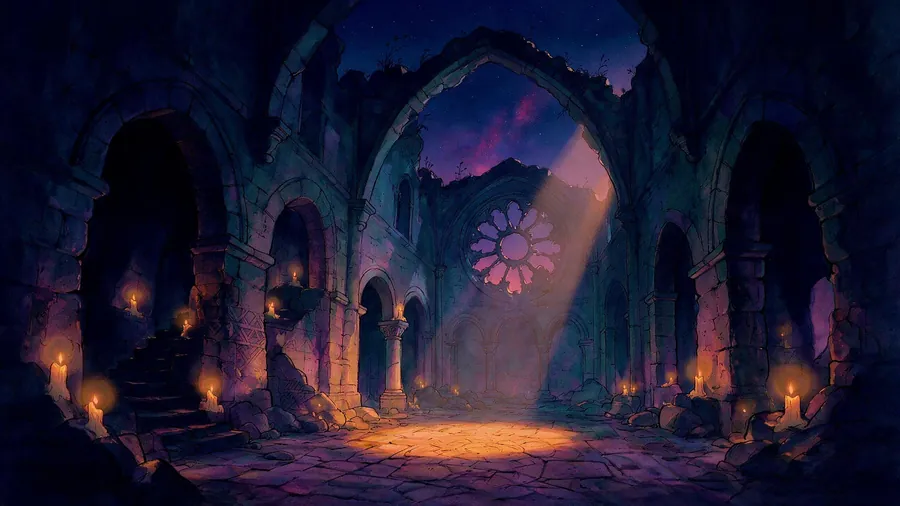
A · Animated feature, 1992
The winner. Of the director’s requests this satisfies the most directly — squash and stretch is the base language here, not a separate effect. In return it is the most expensive language to move: one stuttering cycle jumps straight out of the painted background.
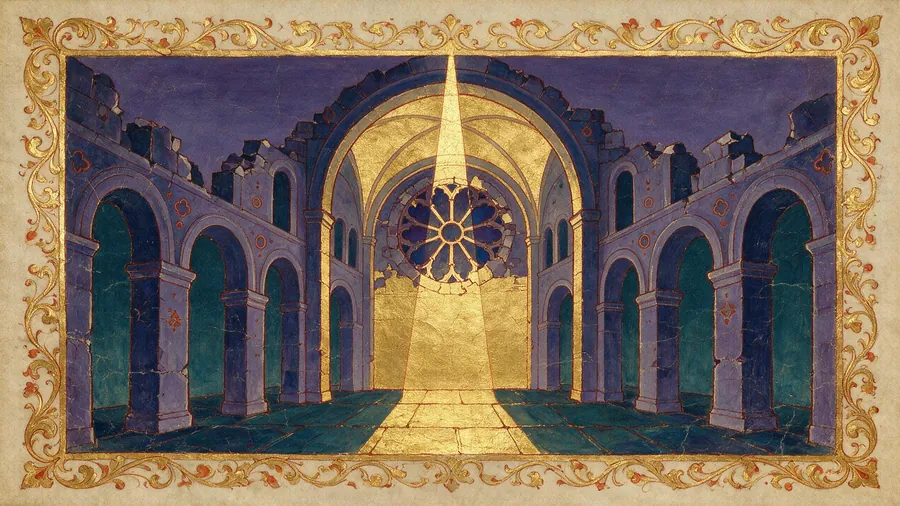
B · Illuminated chronicle
The most faithful to the subject: the coronation city and the chronicle come from the same century, and the flat space is cheap to animate. But the vine border eats into the image area and breaks at the projection wall’s ratio.
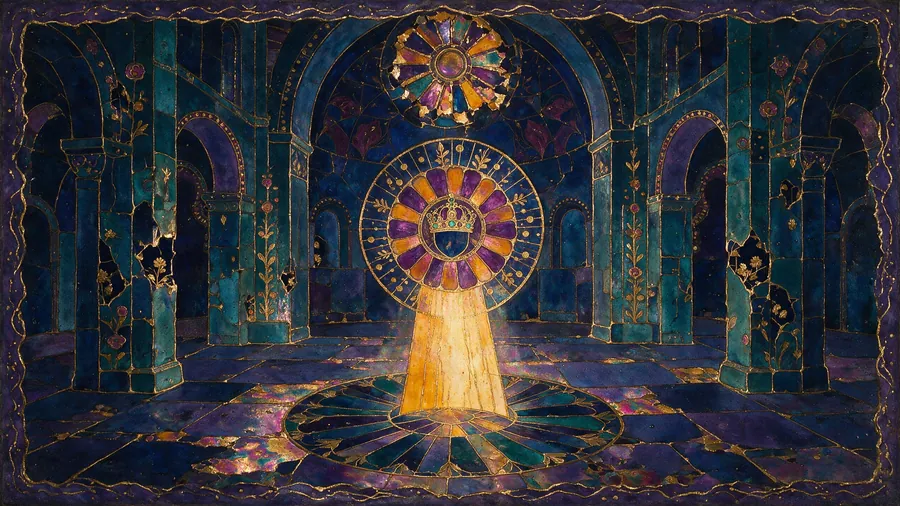
C · Cloisonné enamel
The most striking on an LED wall: glowing colours on a dark ground, readable from a distance. But it is ornamental rather than narrative — after twenty seconds it looks like a screen saver.
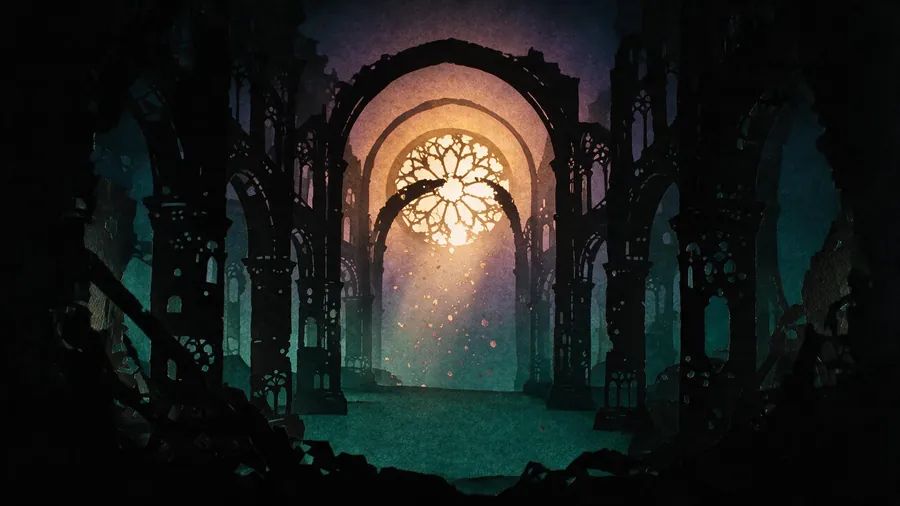
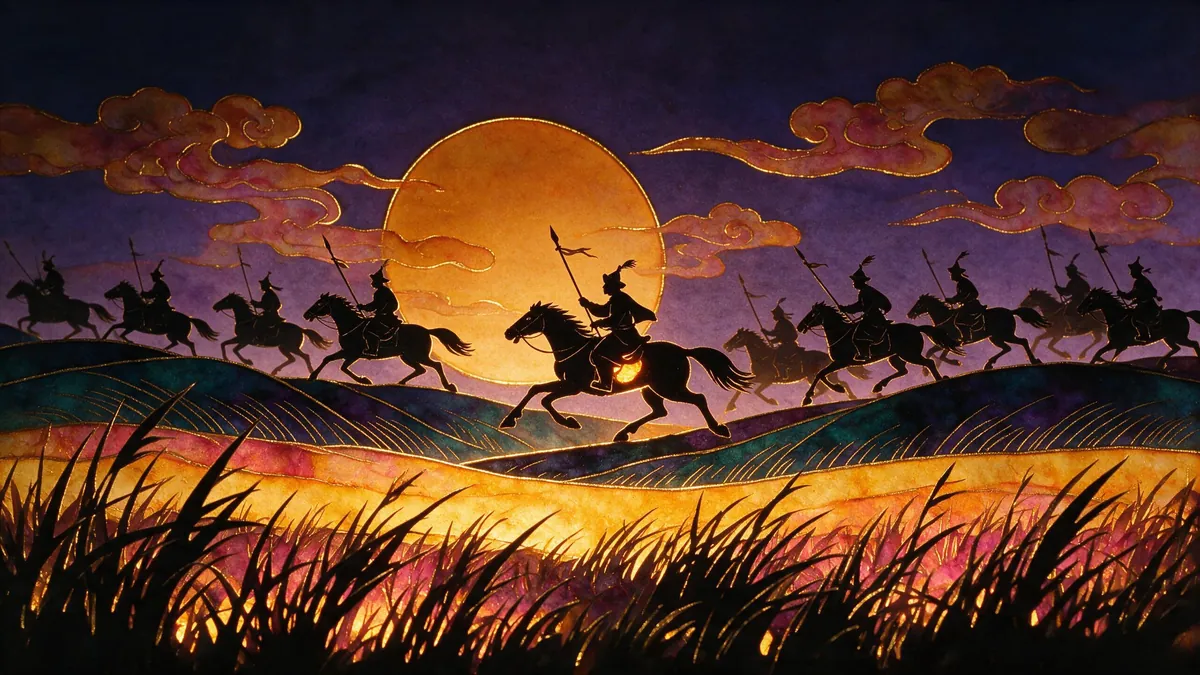
D · Shadow play
Cut-out silhouettes lit from behind. It carries the least information to the screen, which makes it the safest under live stage light — and the least able to tell seventeen numbers apart.
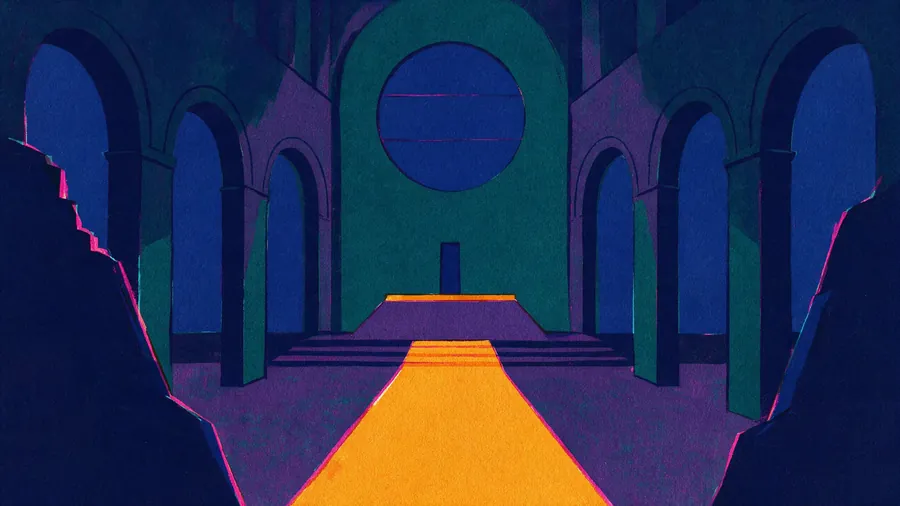
E · Flat graphics, 1955
Large flat colour fields, few lines. Fast to produce and clean to read from a distance, but big uniform areas go noticeably dead when several walls sit side by side.
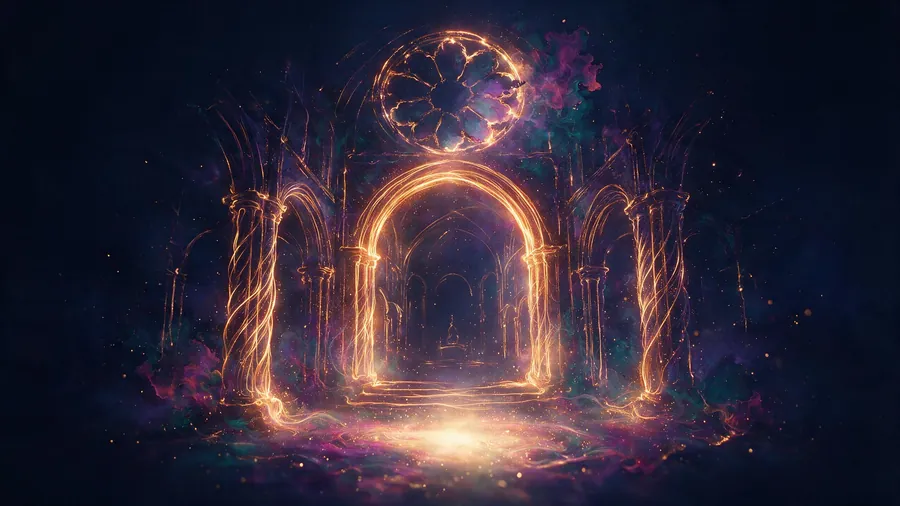
F · Light drawing
Lines of light on a dark ground. In the block tests this mixed with the others more than any of them — the opening and the Saint Stephen block took something from it — but in its pure form it holds no figures, only atmosphere.
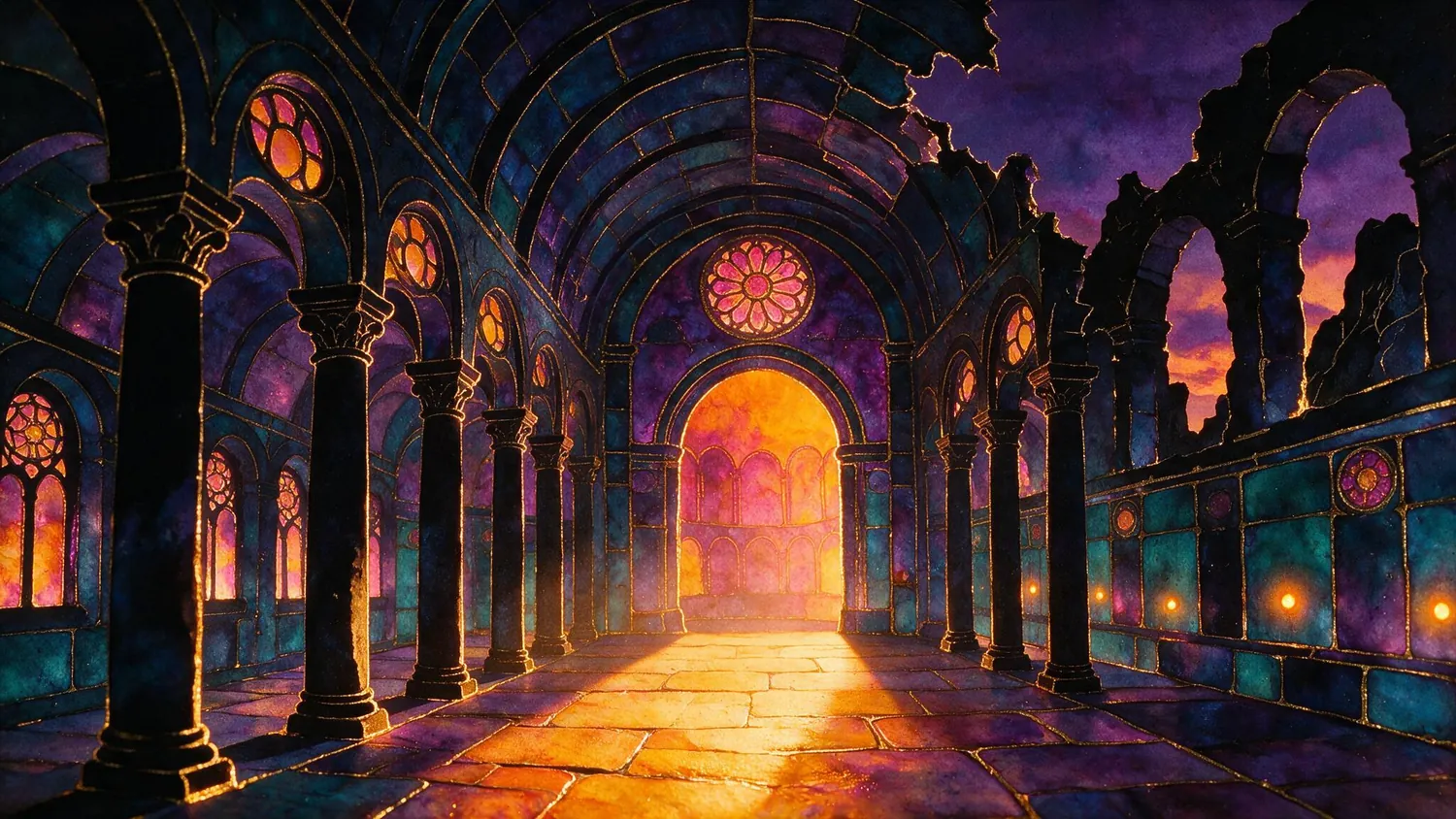
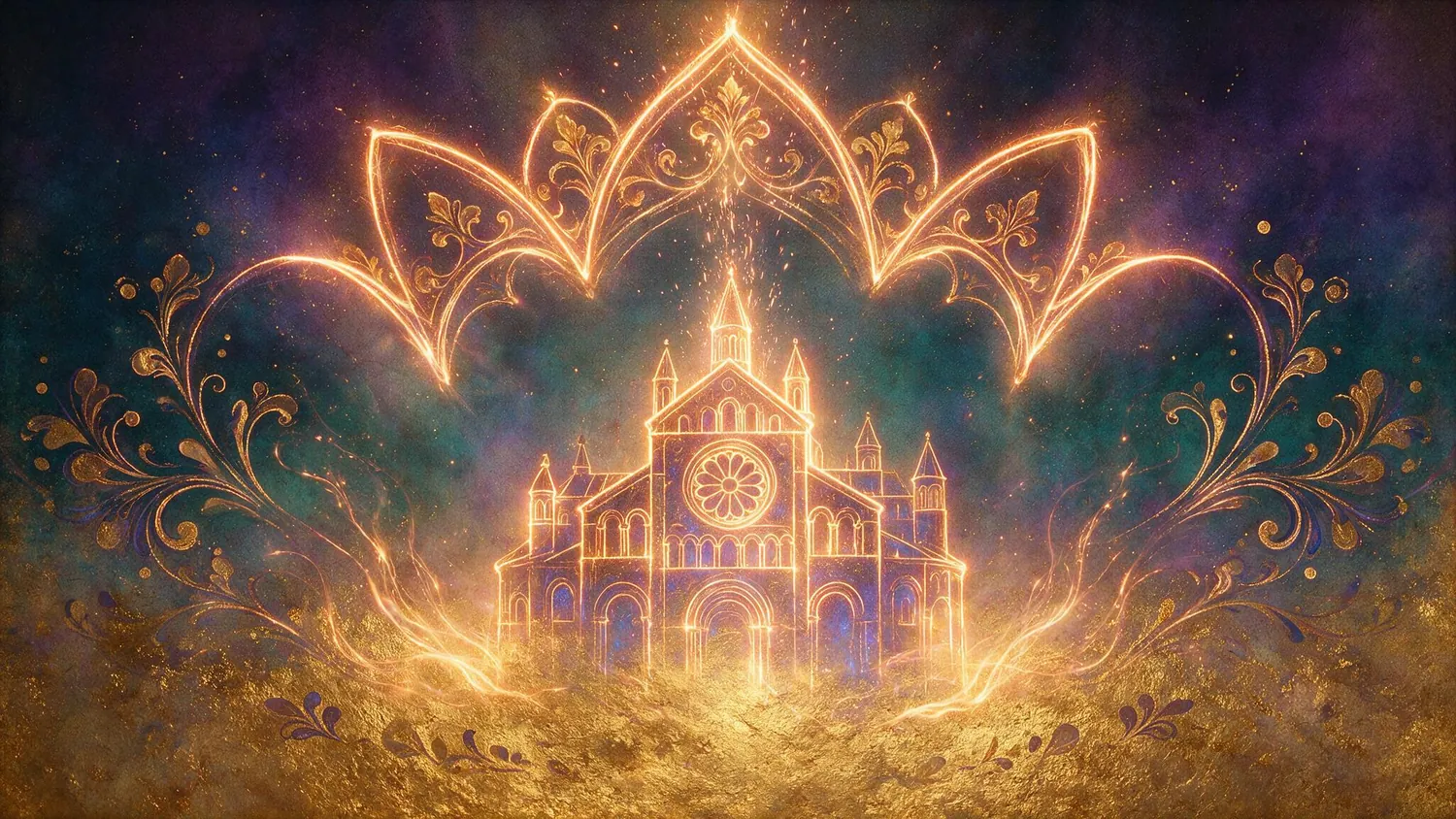

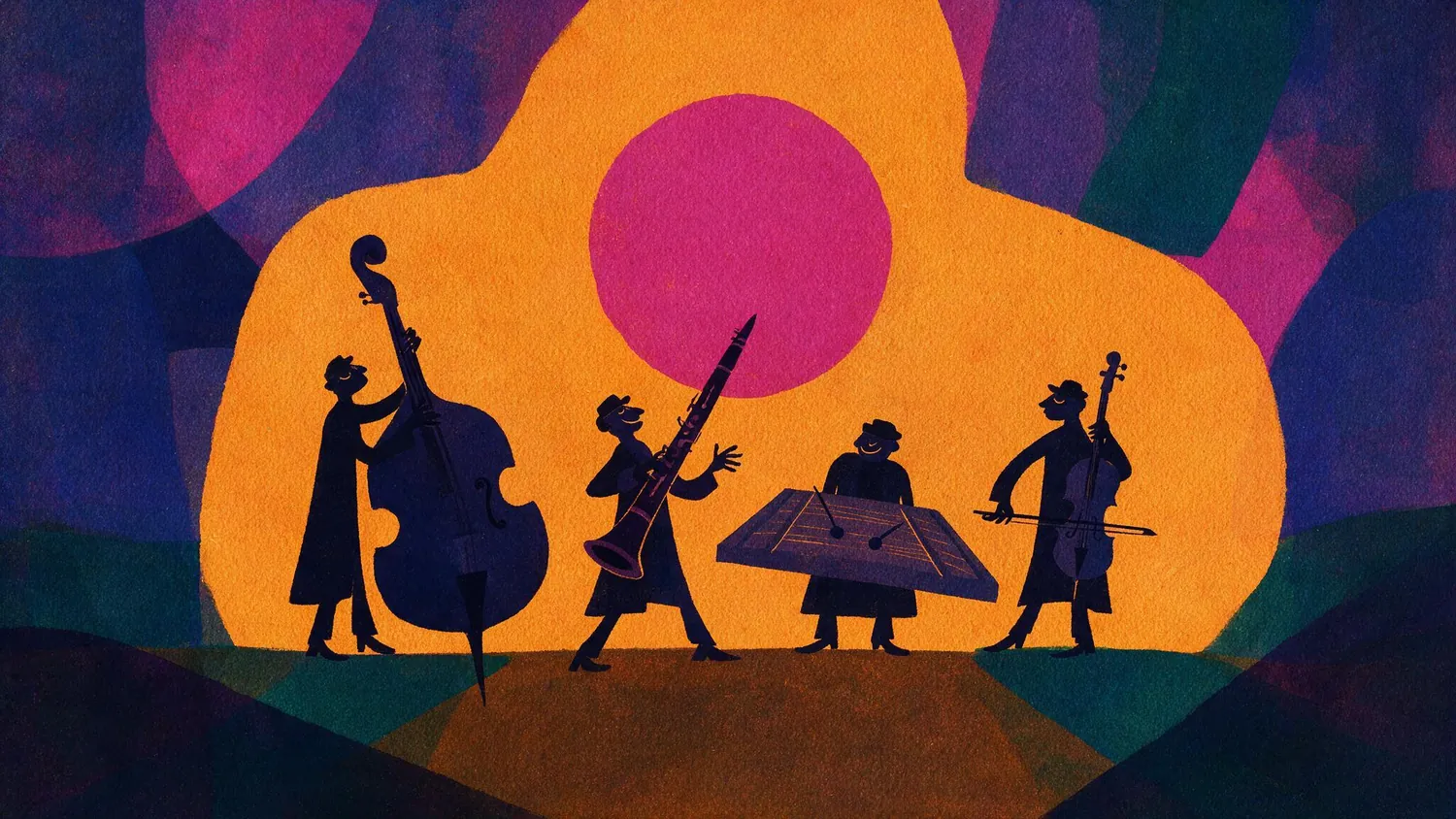
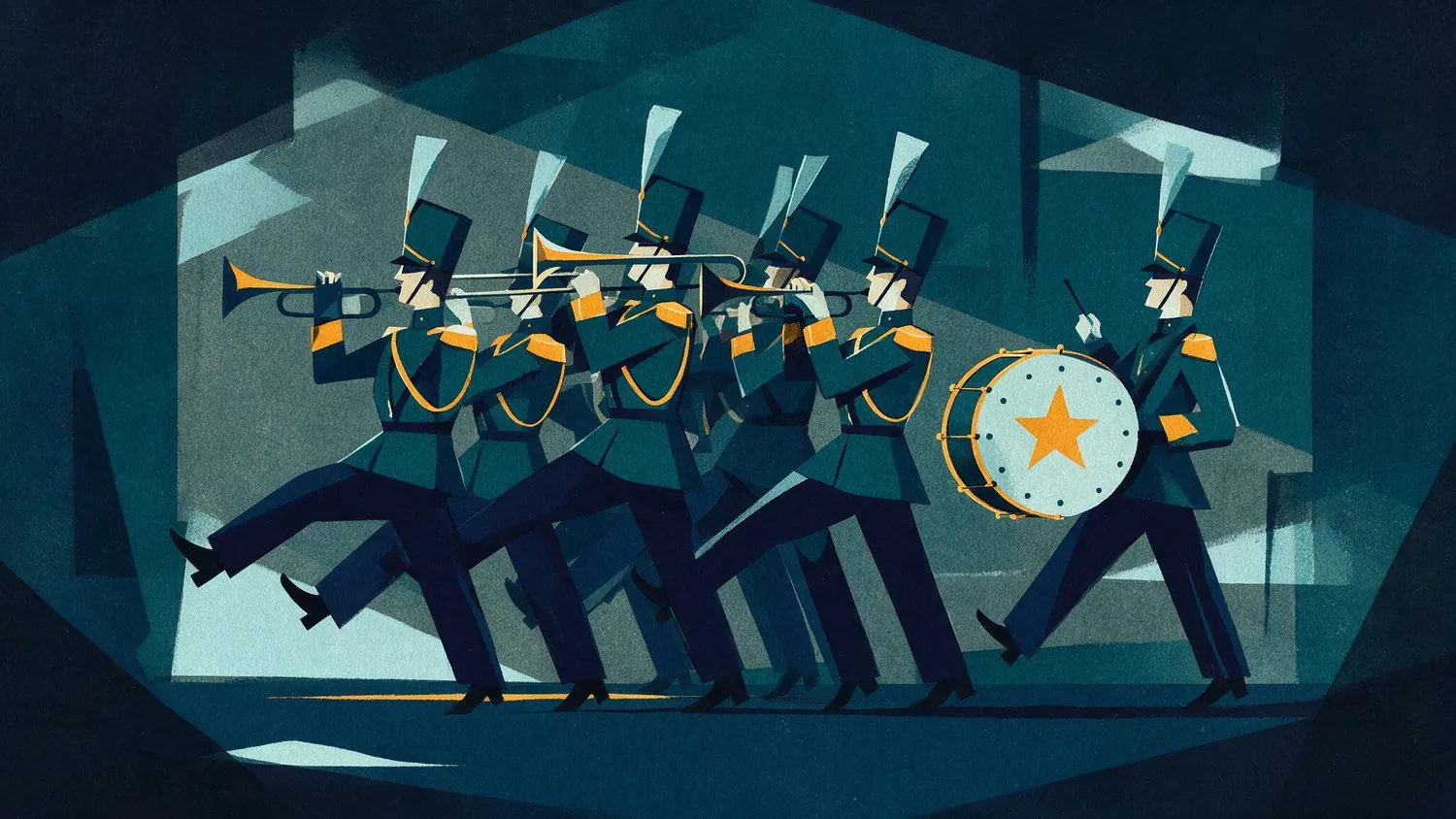
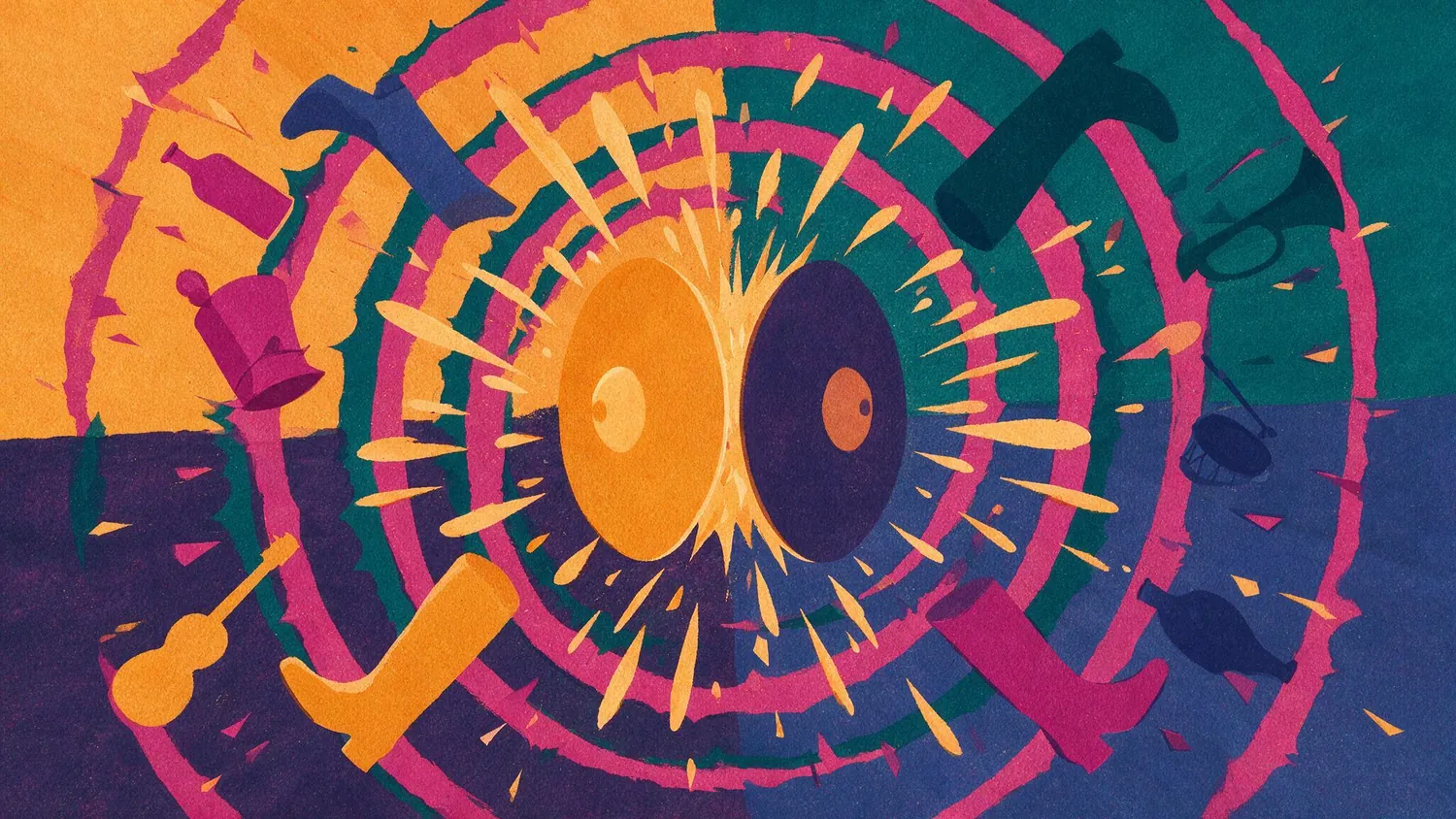
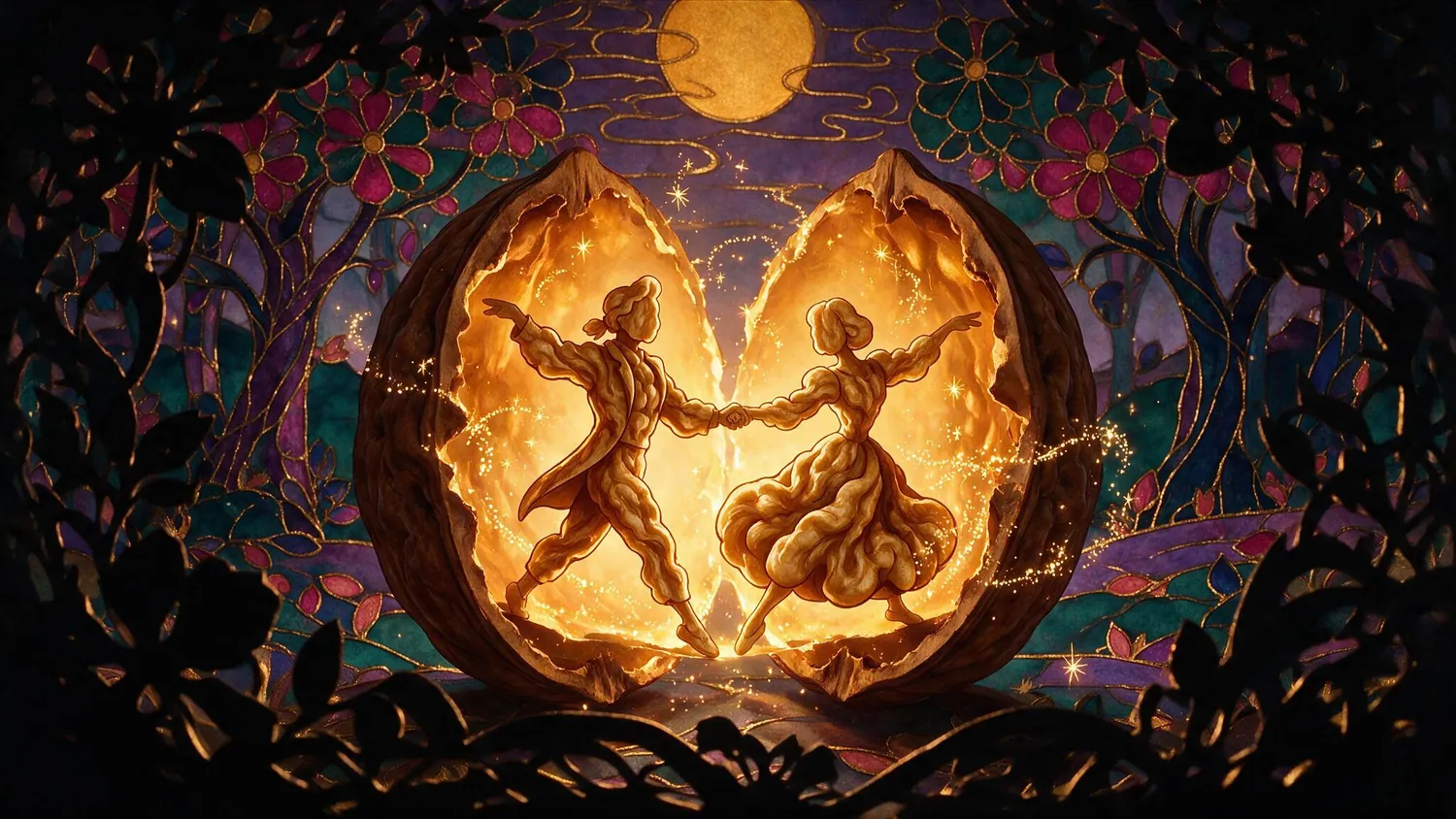
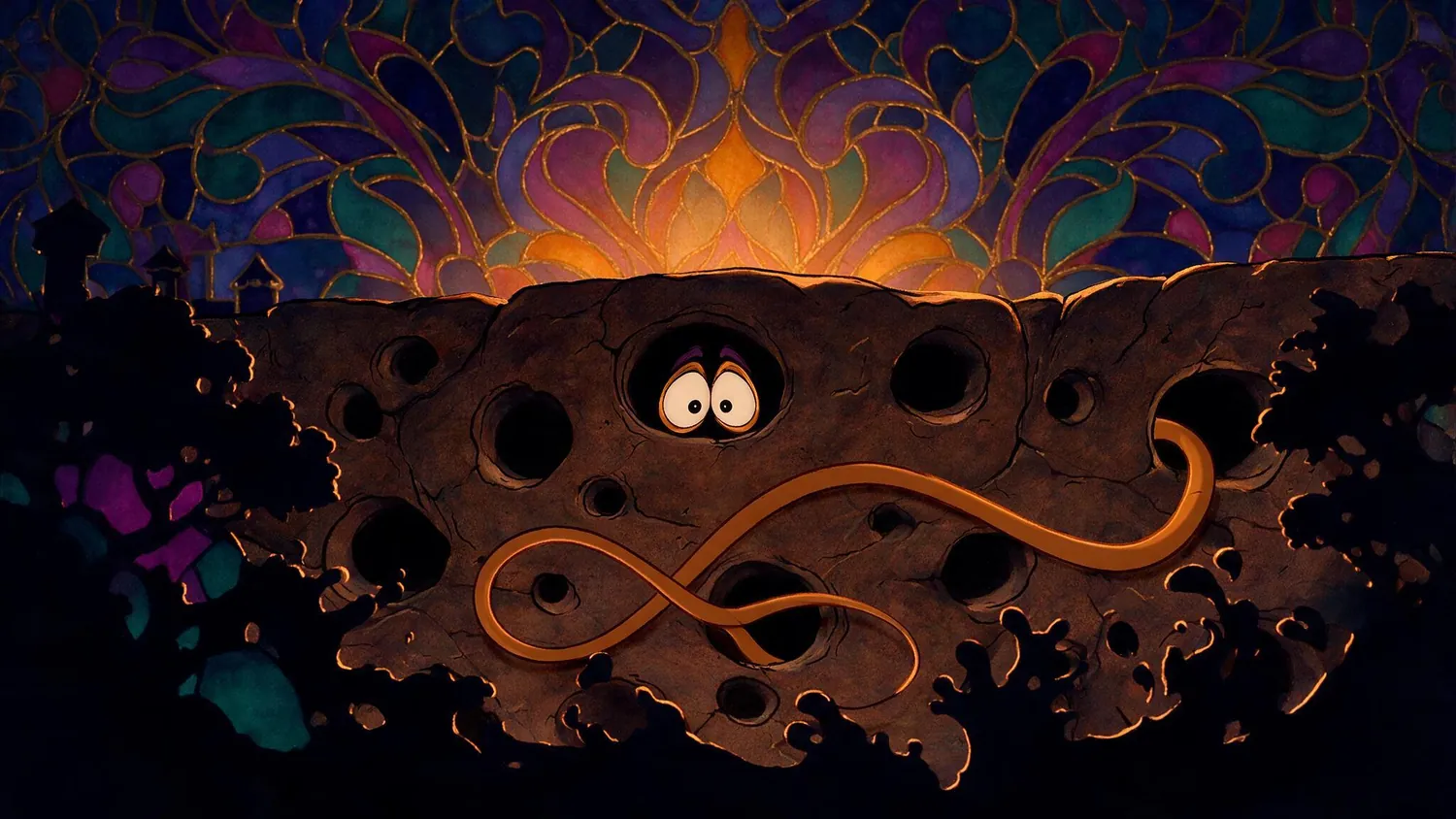
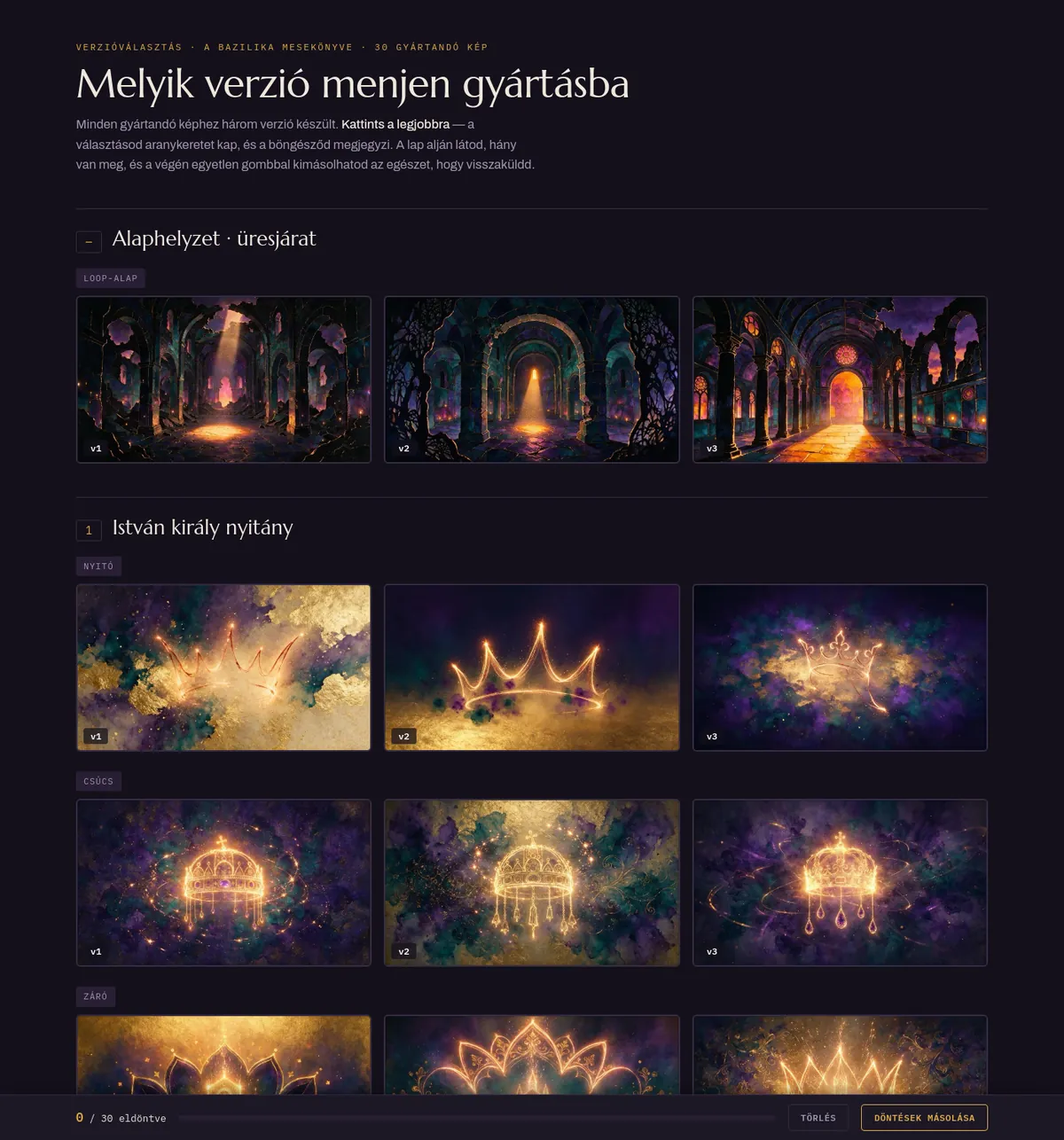
Choosing among ninety images over email takes days. The same ninety on one scrollable page, in threes, side by side, takes half an hour — and at the end the whole set goes back with one button.
Bálint Kutassy
client lead and the team’s spokesperson, KUTASSY